- All Photos
- Wilderness
- Glaciers
- Wildlife
- Towns
- Postcards
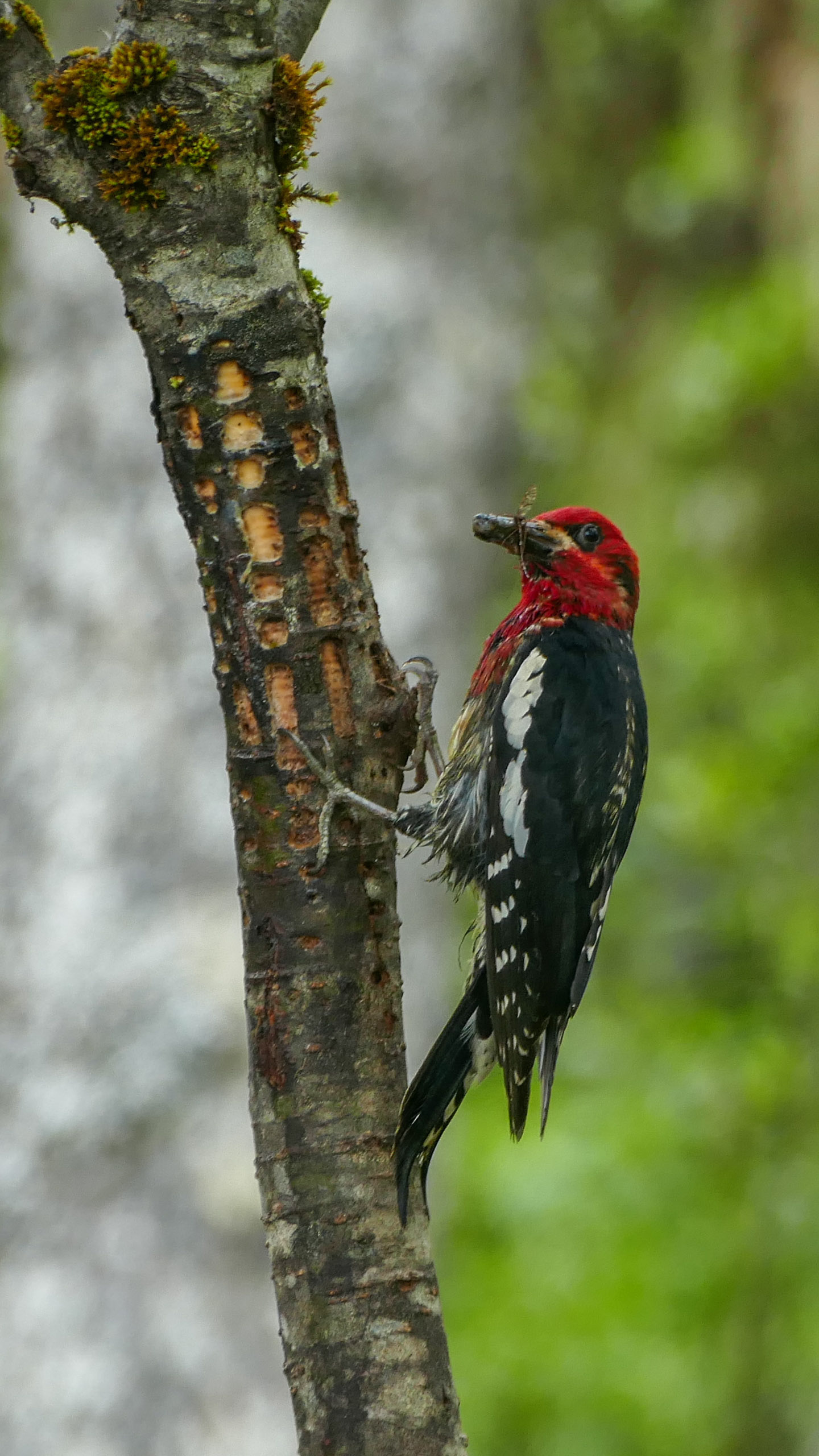
The Red-breasted Sapsucker (Sphyrapicus ruber) uses its bill as a precision chisel to remove just enough outer bark on trees and shrubs to expose the inner bark and the phloem or sap. The phloem carries the sugary solution produced by photosynthesis, and the sapsucker uses a specialized brush-tipped tongue to lap it up. Some sap runs down the willow stem and attracts insects which the sapsucker may both eat and gather to feed its young. Rectangular sapsucker holes are called a ‘well’ and a nesting pair may drill many wells in a concentrated area. Other birds and even small mammals may be attracted to the wells for the sap or for the insects that feed on it. Photographer: Bill Eichenlaub