- All Photos
- Wilderness
- Glaciers
- Wildlife
- Towns
- Postcards
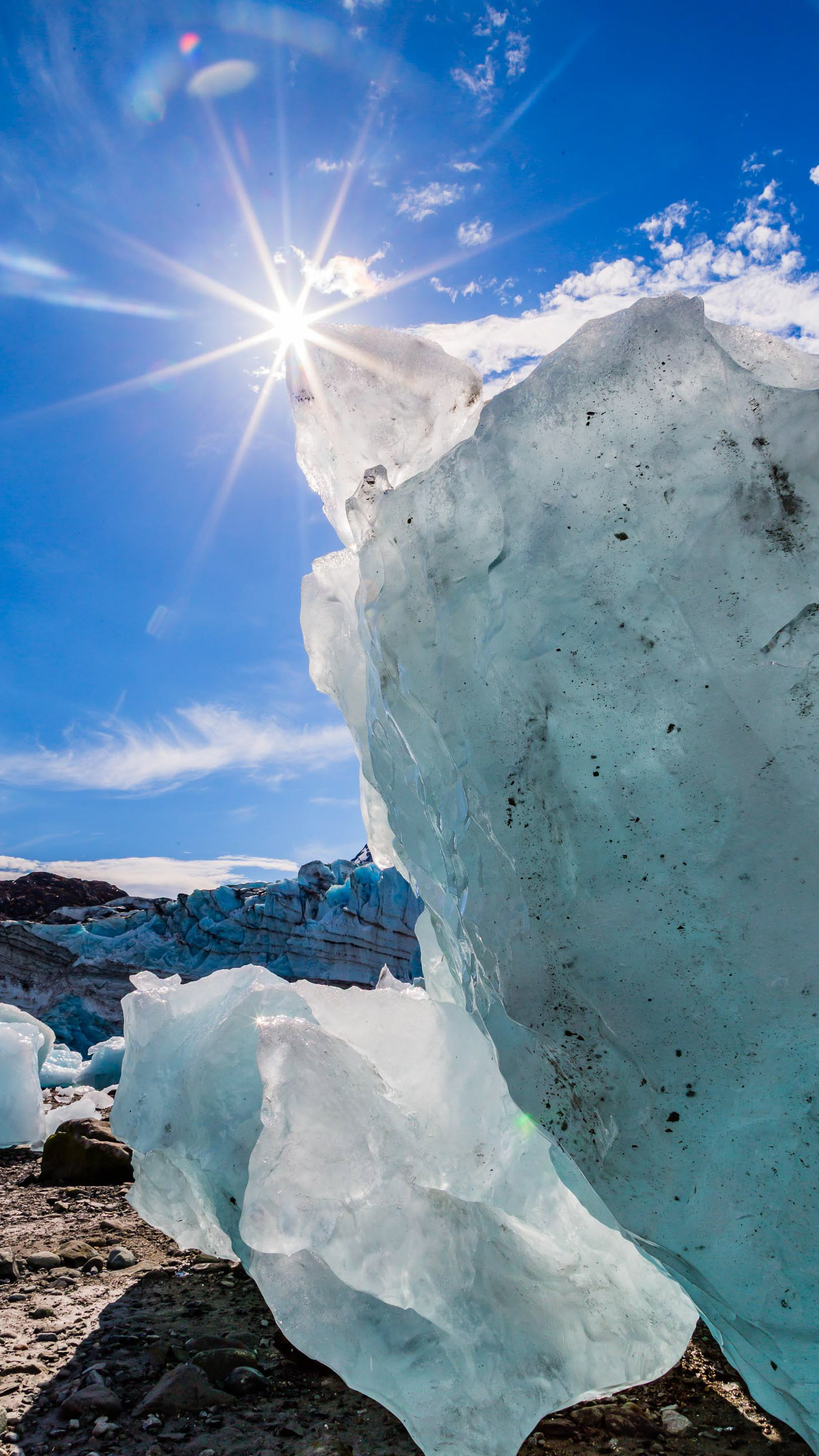
A brilliant sunburst crowns the top of a stranded iceberg resting in the cold, glassy waters in front of Lamplugh Glacier, casting sparkling reflections across the rippling surface and illuminating the ice’s intricate textures and deep blue hues. The jagged edges and crevices of the iceberg catch the sunlight, revealing subtle gradients of color and frozen detail, while the glacier looms behind, its immense ice face a testament to millennia of accumulation and slow, inexorable movement. Achieving this sunburst effect in photography requires careful control of light and aperture: the photographer typically positions the camera so the sun is partially obscured by a solid edge—such as the top of the iceberg or a ridge of ice—and uses a small aperture (high f-stop, like f/16 or higher) to create the radiating star-like rays. This combination of precise framing and aperture control allows the photographer to capture not just the frozen grandeur of the iceberg and glacier, but also the fleeting, magical interplay of sunlight that transforms the scene into a sparkling, luminous spectacle, highlighting both the power and the delicate beauty of Glacier Bay’s icy wilderness. Photographer: Sean Neilson