- New in 2026 Photos
- Galleries
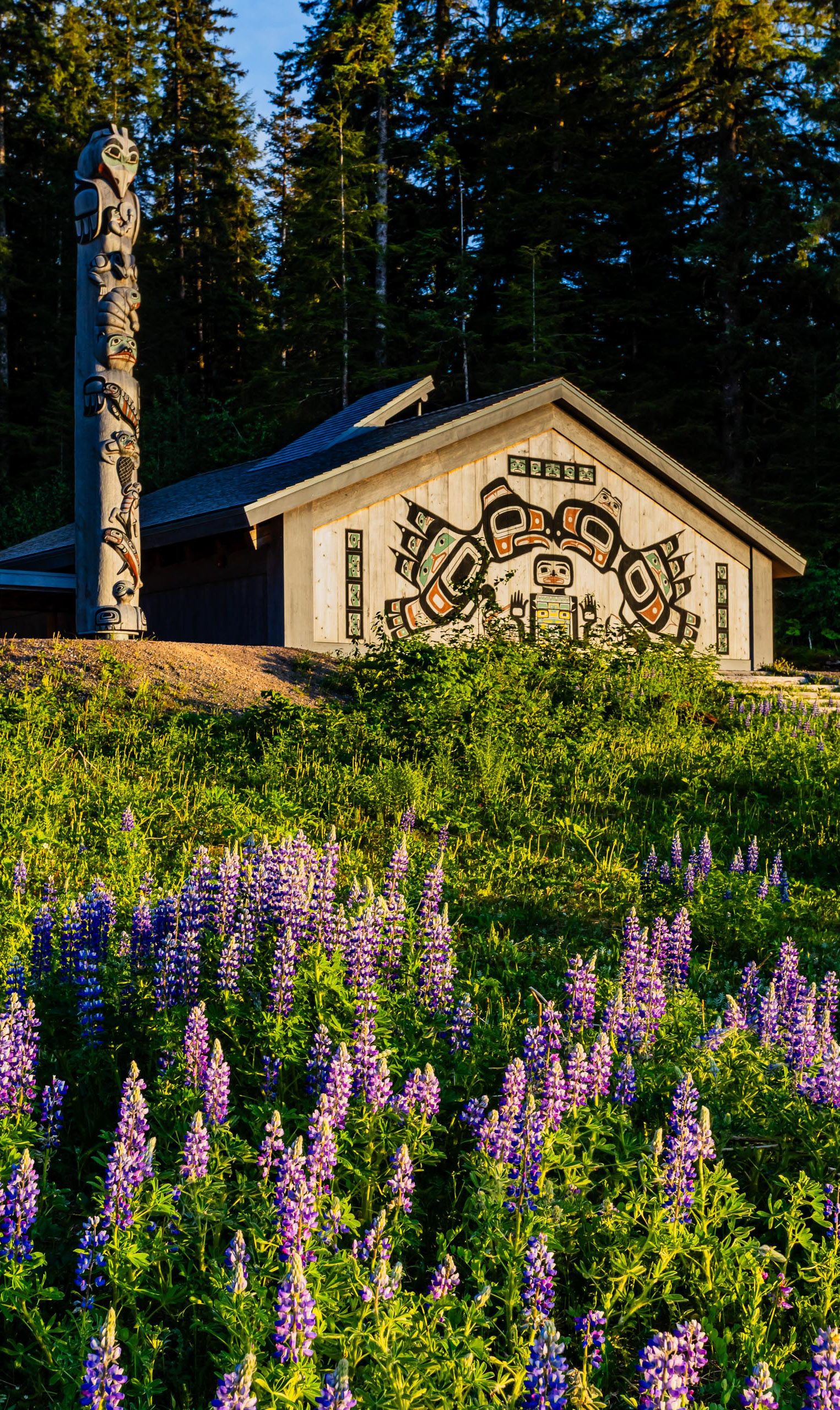
Lupine blooms in the foreground, adding color and texture to the coastal meadow. Behind it, the Huna Tribal House and totem pole stand as cultural landmarks, connecting the landscape to generations of Tlingit presence and tradition. A field of lupine flowers in Alaska can be an early stage of ecological succession. Lupines often colonize disturbed or bare ground, such as areas left by retreating glaciers or landslides (or in this case, the erection of the Huna Tribal House), because they can fix nitrogen and improve poor soils. As the soil becomes richer and more stable, grasses, mosses, and other wildflowers begin to move in and compete for space. Over time, shrubs such as willow or alder may establish, eventually shading out the lupines. If conditions allow, this process can continue toward a shrubland or forest dominated by spruce or hemlock, replacing the original lupine field with taller, longer-lived vegetation. Photographer: Sean Neilson